
All That Is Solid Melts Into Air
Notes on modernity, getting lost and a visual haiku
One of the strange things about studying history is that you always know what happens next. The people you read about never do.
During my master’s, I took a course called Van Wie Is de Stad? (To Whom Does the City Belong?) We read, watched and analysed literature, music and film about the experience of living in the modern city during the twentieth century.
One of the first works we encountered was Alfred Döblin’s Berlin Alexanderplatz. Published in 1929, the novel follows Franz Biberkopf through the streets and underworld of Weimar Berlin. The sound of the city is everywhere in the book. Traffic, advertisements, fragments of conversation, popular songs, machinery and voices all cut through the story. Reading it can feel like walking through the city yourself, overwhelmed by everything happening at once.

Alexanderplatz, Berlin around 1920.
I have always found it strange to read about Germany during the Weimar Republic, in those years between the two world wars. It can feel like watching a train wreck in slow motion. The people living through it are simply going to work, falling in love, getting drunk, listening to music, worrying about money and trying to understand the strange new world around them. All the while, history is moving towards something they cannot yet see.
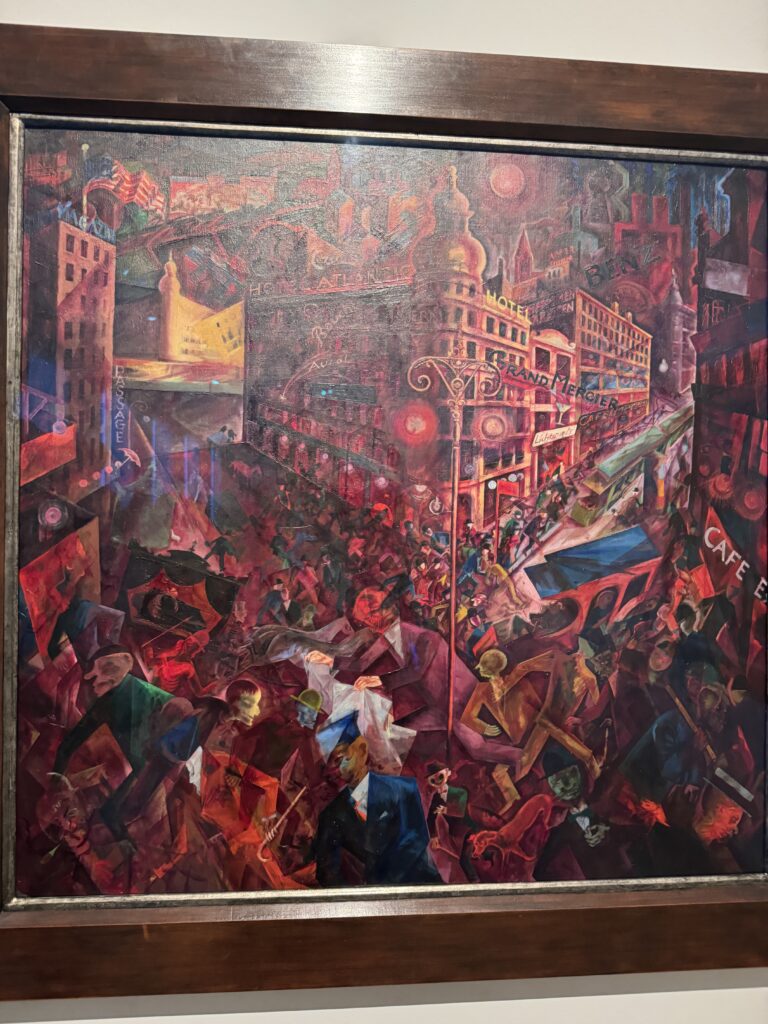
George Grosz, Metropolis, 1916–17. A vision of Berlin on the edge of a new age.
At the centre of the course stood Marshall Berman’s All That Is Solid Melts into Air: The Experience of Modernity. Berman grew up in the Bronx in New York, in a world that was radically transformed during his lifetime.
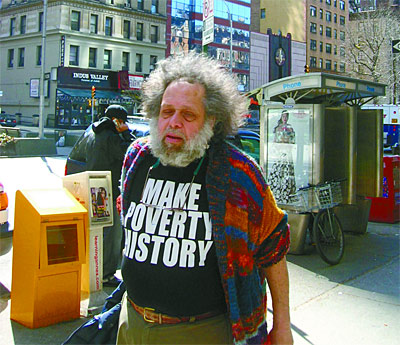
Marshall Berman in New York.
Under the post-war vision of urban planner Robert Moses, entire neighbourhoods were cut through in the name of progress, speed and the automobile. The Cross Bronx Expressway became, for Berman, both a physical reality and a symbol of modernity’s strange violence: the future arriving by destroying the world that already exists.

Cross Bronx Expressway, circa 1965. A city remade for speed.
The title of his book comes from Marx and Engels’ Communist Manifesto:
“All that is solid melts into air.”
Marx was describing the revolutionary force of capitalism: a system that survives by constantly transforming itself. Old relations, traditions, technologies and ways of life are broken apart and replaced. What seems permanent turns out to be temporary. What is modern today may already be obsolete tomorrow.
Berman took that idea beyond economics. For him, modernity was also an emotional condition: the experience of living in a world of constant change, where new freedoms, technologies and ways of life appear while older worlds disappear. To be modern is to live inside a world of extraordinary possibility while knowing that the ground beneath your feet can disappear.
My life has certainly not known the hardships of Biberkopf’s world, nor the losses that shaped Berman’s. Still, something in that feeling was immediately familiar: the sensation of living in an environment that is constantly changing; of being connected to an enormous world whose movements remain largely beyond your control; of having to navigate, as one small individual, the great tides of time.
One idea from Berman has stayed with me ever since. As I remember it, there is no point trying to escape the storm of modernity. You cannot. The best you can do is build a home within it, something that gives you shelter while moving with the storm.
I have always found comfort in that image. I return to it whenever I feel lost.
And feeling lost is something I know well. Over time, I may even have honed it into a method. Much of my work circles around that sensation. There is pleasure in being lost, because for a moment you do not know where you will end up. That uncertainty can be the reward. Remembering this makes wandering through the strange forests of the modern city more enjoyable.
It also changed the way I look at buildings.
Buildings now appear to me as beastly monuments to the time in which they were made. Look at one long enough and you can begin to sense the ideas that produced it: what a society feared, what it desired, what it imagined the future might become.
Sometimes, looking closer, I can almost hear the sounds a building would make if it could speak. The music the architect might have been listening to while designing the beast, and the music playing in my own head as I look at it in the twenty-first century.
In 2024, I travelled to Ljubljana, Slovenia, where I came across Republic Square, originally known as Revolution Square.

Revolution Square, Ljubljana, around 1960-1963.
The architecture immediately produced a strong physical feeling in me: the sensation of being small. A tiny, lost individual inside the modern storm.
Standing there on a sizzling hot day, I found myself thinking about the society that had imagined this place in the 1960s. About Yugoslavia, Döblin and Marshall Berman. About all the futures that buildings once promised, and what happens when those futures themselves become history.
So I started filming.
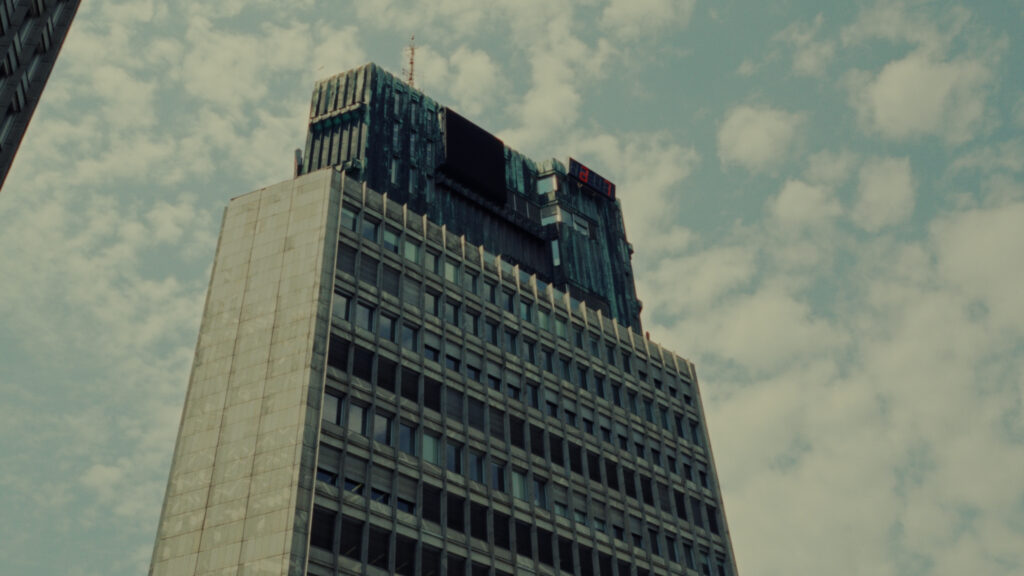
Still from my visual haiku All That Is Solid, filmed in Ljubljana in 2024.
For two years, the footage remained untouched on my computer. Eventually, I returned to it and decided to experiment with a new form: the visual haiku.
The idea is simple. I write a haiku and search for images that seem to live inside the same feeling. In this case, the poem and the footage found each other.
I asked my friend Nathan Peters to compose the music and capture something of that sensation: modernity on a hot day. I think he captured it beautifully.
The visual haiku is best experienced with headphones. I hope you enjoy:
All That Is Solid — A Visual Haiku
I console myself with the idea that things have to change to stay the same.
Take care & don’t forget to use sunscreen,
Huibert
10 July 2026


